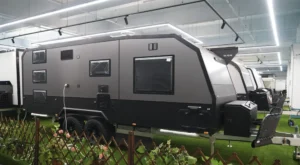
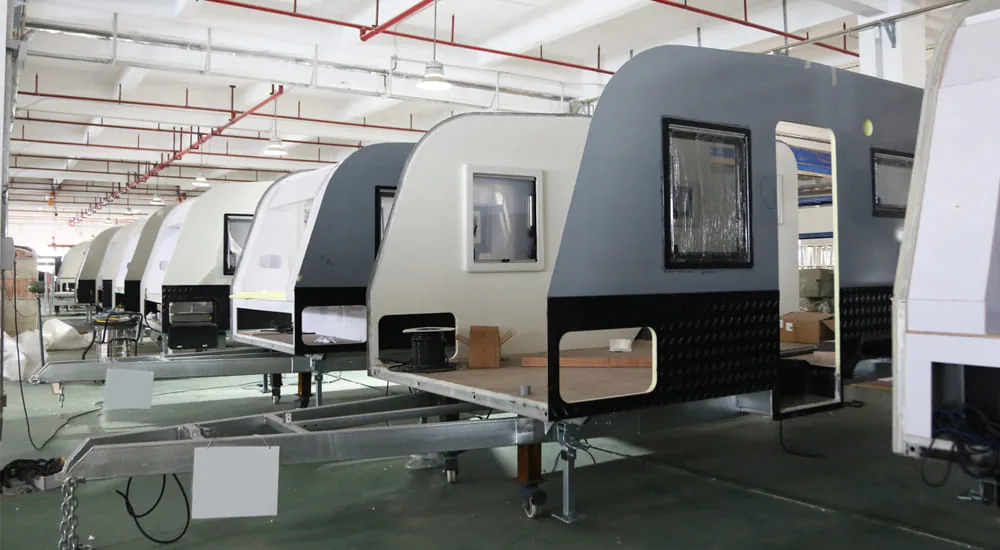
Choosing the right caravan fleet supplier in Australia determines whether a rental fleet performs profitably over a three-to-five year operating cycle or becomes an ongoing maintenance liability. Rental fleet operators buy caravans differently from individual buyers and dealerships. The priorities shift: durability over luxury, standardisation over bespoke customisation, total cost of ownership over purchase price, and serviceability over specification novelty.
This caravan fleet supplier Australia guide covers what fleet buyers should evaluate before committing to a bulk caravan purchase, how volume pricing and minimum orders work at fleet scale, and the specification priorities that separate a purpose-built rental caravan from a retail unit sold in quantity.
Key Takeaways
- Fleet operators need a supplier who can deliver consistent specification across multiple units — not just a low unit price.
- Standardisation across the fleet reduces parts inventory, maintenance training requirements and turnaround time between guests.
- Durability and serviceability specifications matter more for rental use than for private ownership — fleet units are used continuously, often by unfamiliar operators.
- Volume pricing becomes more significant as order size grows. Confirm the per-unit price at your actual order volume, not a headline minimum-order rate.
- ADR compliance requirements apply to all imported caravans regardless of end use. Rental and commercial fleet operation does not create a separate or simplified approval pathway.
- Warranty terms for commercial and rental use differ from standard retail warranty. Confirm in writing what is and is not covered before purchasing.
What Makes Fleet Purchasing Different
Standardisation Is a Cost Driver
A private buyer values the ability to specify exactly what they want. A fleet operator values the ability to specify exactly the same thing across every unit in the fleet.
When every caravan shares the same floor plan, the same electrical specification, the same appliances and the same fit-out, the operational benefits compound:
- Parts inventory: One set of replacement parts covers the entire fleet. Non-standard components across a mixed fleet require separate stock for each variant, increasing both cost and complexity.
- Maintenance turnaround: Technicians familiar with one specification can service any unit without retraining. Mixed fleets slow maintenance and increase the risk of errors.
- Guest experience: Consistent fit-out means guests know what to expect regardless of which unit they are allocated. Inconsistent fleets generate inconsistent reviews.
- Resale: A fleet of identical units is easier to value and liquidate than a mixed collection. Buyers for fleet sell-offs prefer homogeneous stock.
The implication for supplier selection: a supplier who can lock in a confirmed specification and deliver it consistently across a multi-unit order is worth more than one offering a marginally lower unit price on a non-standardised basis.
Durability Over Luxury
Rental caravans are used more intensively than privately owned units. Fleet units see high-frequency use across a range of operators and road conditions, and the specification priorities for rental fleet use differ accordingly from those of a private buyer:
| Feature | Private Buyer Priority | Fleet Operator Priority |
|---|---|---|
| Interior finish | Premium materials, aesthetics | Durable, easy to clean, replaceable |
| Appliances | Brand preference | Parts available through Australian distributors |
| Electrical system | Maximum capacity | Reliability, accessible components |
| Chassis | Standard highway specification | Off-road rating if regional routes involved |
| Suspension | Standard | Heavy-duty for continuous loaded use |
| Locks and hardware | Standard | Commercial-grade; guest and staff access managed separately |
A caravan specified for private weekend use will not perform the same way under continuous rental use. Fleet buyers should specify accordingly — and a capable supplier should be able to advise on which components are rated for commercial use patterns.
Volume Pricing and Minimum Orders
The figures below are illustrative planning ranges. Volume pricing depends on the specific model, modification scope, delivery timeline and the supplier relationship — confirm the per-unit price at your actual intended volume in writing, not from a headline rate.
- Small fleet (5–9 units): Volume pricing begins to separate from single-unit retail rates. A direct supplier relationship becomes viable, and ODM specification lock-in is typically achievable at this scale.
- Mid-range fleet (10–19 units): Pricing improvement can be more meaningful. Manufacturers may schedule a dedicated production run rather than fitting your order around existing scheduling, which can improve lead time predictability.
- Larger fleet (20+ units): Fleet-specific specification changes — chassis upgrades, appliance standardisation, electrical modifications — can become more economically viable per unit at this volume. This is also the scale at which negotiating commercial warranty terms is generally more practical.
Note that minimum order quantity, price discount thresholds and the economic batch size for a specific customisation are three different things. Do not assume that reaching one threshold automatically satisfies the others. Regardless of order volume, confirm commercial warranty terms applicable to rental use before purchasing — this applies at any fleet size.
Fleet Financing
Fleet acquisition at scale typically involves structured financing rather than outright purchase. Common instruments for Australian fleet buyers include chattel mortgage (the asset is held by the buyer, financed by the lender) and finance lease (the asset is held by the financier, with payments structured over the lease term). The treatment of GST, depreciation and operating costs differs between these structures and can materially affect net fleet economics over the operating cycle. Confirm the financing structure with your accountant or a fleet finance broker before committing to a purchase volume — the per-unit landed cost is only one component of the total financial picture.
Fleet Specification Checklist
Before finalising your fleet purchase specification, confirm the following with your supplier:
Chassis and structure
- ATM and tare weight confirmed against your towing fleet capability (and, for self-drive hire, against the range of customer tow vehicles)
- Chassis rating appropriate for intended route conditions (sealed highway vs regional unsealed)
- Suspension specification rated for continuous loaded use
Electrical
- Battery bank capacity sufficient for intended use pattern (powered site vs off-grid)
- Solar panel wattage confirmed for intended use
- 240V inlet and internal wiring compliant with applicable Australian standards
- Inverter specification if off-grid power is required
- All electrical components serviceable with parts available in Australia
Gas and appliances
- Gas appliances approved for use in Australia
- Installation compliant with applicable gas-safety requirements
- Appliance models available through Australian distributors — confirm before specifying
- Service access panels adequate for routine maintenance
Water and plumbing
- Fresh water and grey water capacity appropriate for occupancy and intended route
- Pump and filtration specification confirmed
Locks and security
- Unit-specific guest keys — each hired unit should have its own key so that a lost or unreturned key affects only that unit
- Controlled master-key access for authorised staff where operationally supported — confirm the implementation with your supplier and lock supplier before specifying
- Hardware appropriate for commercial rental context
Warranty and documentation
- Written warranty terms for commercial and rental use confirmed before purchase
- Exclusions documented — particularly wear components under high-utilisation use
- Warranty service pathway in Australia identified, including who approves repairs, whether parts and labour are both covered, and how units are managed during parts lead times
- Per-unit delivery inspection records requested for each caravan in the order
- Confirmed specification sheet with part numbers for key components, and the process for approving any substitutions
ADR Compliance for Fleet Imports
ADR compliance requirements apply to all caravans imported into Australia regardless of whether they are purchased for private use, dealership resale or rental fleet operation. Rental and commercial fleet use does not create a separate or simplified approval pathway.
For fleet buyers importing directly from a manufacturer:
- For trailers with an ATM not exceeding 4.5 tonnes, supplying more than 4 units to the Australian market within a 12-month period requires the appropriate vehicle type approval to be in place before supply commences. Supplies of 4 or fewer units may be eligible for concessional RAV entry approval — a different pathway with its own requirements, not an exemption from approval.
- Each caravan must be entered on the Register of Approved Vehicles (RAV) before it can be used on Australian roads. RAV entry is a separate step from state or territory road registration — both are required.
- The entity responsible for the approval submission — manufacturer, importer or a nominated representative — should be confirmed and documented before the order is placed, not after delivery. A compliance engineer can assist with preparing technical documentation and managing the approval process; the responsibilities of each party should be agreed in writing before the order is placed.
- Where applicable, confirm that import approvals are in place before arranging sea freight — not after the shipment arrives.
Fleet buyers purchasing from a domestic dealer or distributor operating in the Australian market will typically have compliance managed by the supplier. Confirm the compliance status of the specific model and configuration before committing regardless of purchasing channel.
For a detailed overview of the ADR compliance pathway for imported caravans, see ADR Compliance for Imported Caravans: What Every Australian Dealer Needs to Know.
What to Look for in a Fleet Supplier
Evaluating a supplier for bulk caravan fleet purchasing involves more than comparing unit prices. The questions that matter at fleet scale:
Can they lock in a confirmed specification? A supplier who cannot guarantee consistent specification across a multi-unit order is not a fleet supplier — they are a retail supplier selling multiple individual units. Ask specifically: what is the process for confirming specification, at what point is it locked in before production, and what documentation is provided per unit at delivery?
Do they have evidence of prior fleet supply? Ask for references from fleet buyers. A supplier who has successfully delivered 10+ units to the same confirmed specification has demonstrated the production discipline that fleet purchasing requires.
What is their parts pathway in Australia? For fleet operations, the availability of replacement parts domestically is as important as the initial specification. Confirm which components are stocked in Australia and which require international lead times — and factor this into your maintenance planning.
What are the commercial warranty terms? Many manufacturer warranties are written for retail and private use and exclude commercial or rental application. Confirm in writing what coverage applies to your intended use case, who approves repair work, and whether both parts and labour are covered under warranty. These questions apply at any fleet size.
What is their production lead time for fleet orders? A fleet acquisition affects your operational capacity from the delivery date forward. Understand the production schedule, the sea freight timeline (port-to-port from the manufacturing location to your destination port) and the clearance and compliance timeline as separate components — and build each into your launch planning.
For an overview of the direct sourcing process from Chinese manufacturers — including factory due diligence, sample inspection and landed cost breakdown — see China Australia Caravan Cost Comparison: 2026 Landed Cost Guide.
Frequently Asked Questions
What is the minimum order quantity for a bulk caravan purchase in Australia?
There is no universal minimum — it depends on whether you are purchasing from a domestic dealer, a distributor or a direct import manufacturer, and on whether modifications are involved. For direct import programmes, volume pricing typically becomes more significant as order size grows. Minimum order quantity, price discount thresholds and the economic batch size for a specific customisation are different things — confirm each separately with your supplier in writing at your actual intended volume before committing.
Do rental fleet caravans need separate ADR compliance?
No — ADR compliance requirements apply to imported caravans regardless of whether they are purchased for private use, dealership resale or rental fleet operation. Rental and commercial use does not create a separate or simplified approval pathway. The appropriate approval pathway — which may involve vehicle type approval or concessional RAV entry approval depending on vehicle category, quantity and applicable conditions — must be in place before the vehicles are used on Australian roads. RAV entry is also a separate step from state or territory road registration; both are required. Confirm the approval pathway for your specific model and configuration with a compliance professional before placing the order.
What warranty applies to caravans in rental fleet use?
Warranty terms for commercial and rental use vary by manufacturer and must be confirmed in writing before purchase. Many standard retail warranties exclude commercial use or impose limitations for high-utilisation applications. Fleet buyers should ask specifically: what use cases are covered, which components are excluded, whether parts and labour are both included, who approves repair work, and how units are managed during parts lead times. Confirm the warranty service pathway in Australia before committing to a supplier — not after the units are delivered.
How long does fleet delivery take from a Chinese manufacturer?
Total lead time includes several separate components: production time (which varies depending on the model and whether modifications are involved), sea freight (the port-to-port transit time between the manufacturing location and your destination port — confirm this for your specific route and timing), Australian customs clearance, and any compliance or RAV processing. Where applicable, import approvals should be confirmed before arranging sea freight. Build each component into your planning timeline separately, and confirm current estimates with your supplier at the time of order.
Can I get a consistent specification across all units in a fleet order?
Yes — specification consistency is one of the primary reasons fleet operators purchase from a single manufacturer rather than aggregating units from multiple sources. A direct manufacturer relationship, confirmed with a signed specification sheet and drawing confirmation before production, is the most reliable way to ensure all units match the same specification. At delivery, request per-unit inspection records and confirm each unit against the locked specification before accepting. Document the process for approving any component substitutions before production begins.
Ecocampor supplies caravans to Australian fleet operators and dealers, with confirmed specification sign-off before production for all multi-unit orders. Contact the team to discuss your fleet volume, specification requirements and delivery timeline.